
Daily check-ins
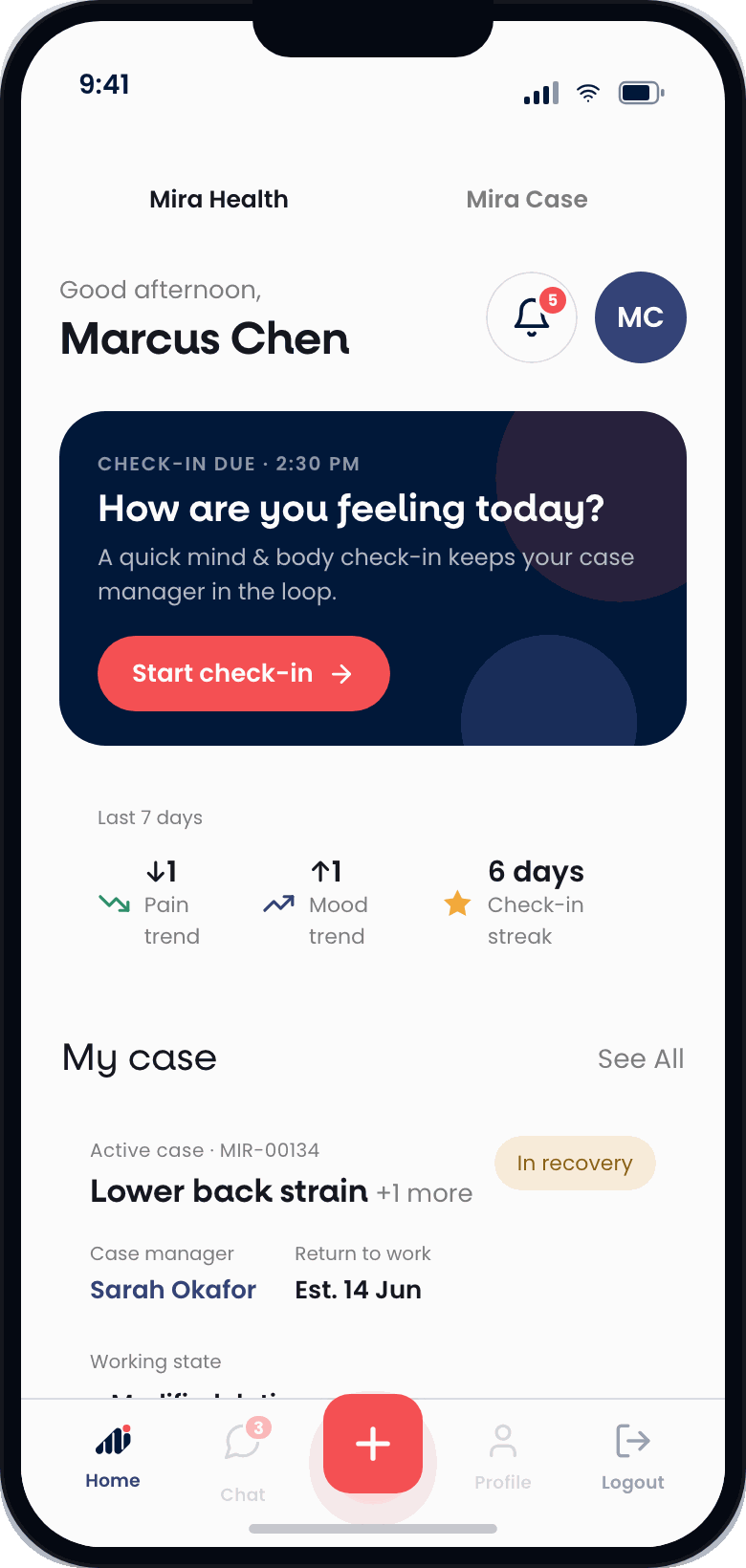
A quick mind and body check-in from the patient's own phone, building a picture of their recovery day by day.

Solutions · Clinical
Mira for Clinical follows patients through care programmes and the weeks between visits, from post-operative and post-partum recovery to chronic and weight management, so a change is noticed while it is still small.

What it is for
The same check-ins, plans and alerts that support recovery at work and in sport carry straight across to clinical care. What changes is the patient and the pathway.

01 · Programme delivery
Weight and metabolic management, chronic disease and rehabilitation programmes, with each participant checking in on the measures that matter and the clinical team seeing who is falling behind.
02 · Between appointments
A patient goes home after surgery, after birth or after a discharge, and everything goes quiet until the next appointment. Mira keeps the check-ins going in between and alerts the clinical team when the answers start to change.
The clinical problem
Between appointments there is nothing to go on, so each consultation starts by piecing weeks together from memory.
Someone works through a call list, and whoever does not answer is assumed to be fine.
A problem appears only when the patient turns up somewhere else, after the simple fix has passed.
People leave with a leaflet and no way to see whether their own recovery is on track.
How it runs
A patient joins a programme or recovery pathway and sets themselves up on their own phone.
Regular check-ins on symptoms, pain, mood and the measures that matter for their care.
The clinical team sees each patient and the whole group, with alerts on anyone whose answers are changing.
Adjust the plan, get in touch or bring the patient in, while it is still a phone call rather than an admission.
What clinical teams use
A quick mind and body check-in from the patient's own phone, building a picture of their recovery day by day.
When the answers start to drift, the clinical team is alerted before the patient presents somewhere else.
Patients can see their own plan, their progress and what happens next.
Discharge summaries, referrals and results kept with the patient's case.
Patients can reach their care team directly, with every conversation kept alongside the case.
Progress and participation across a programme, without exporting anything.
Get started
A 20-minute walkthrough of the platform, set up around how your organisation manages injury and recovery.